
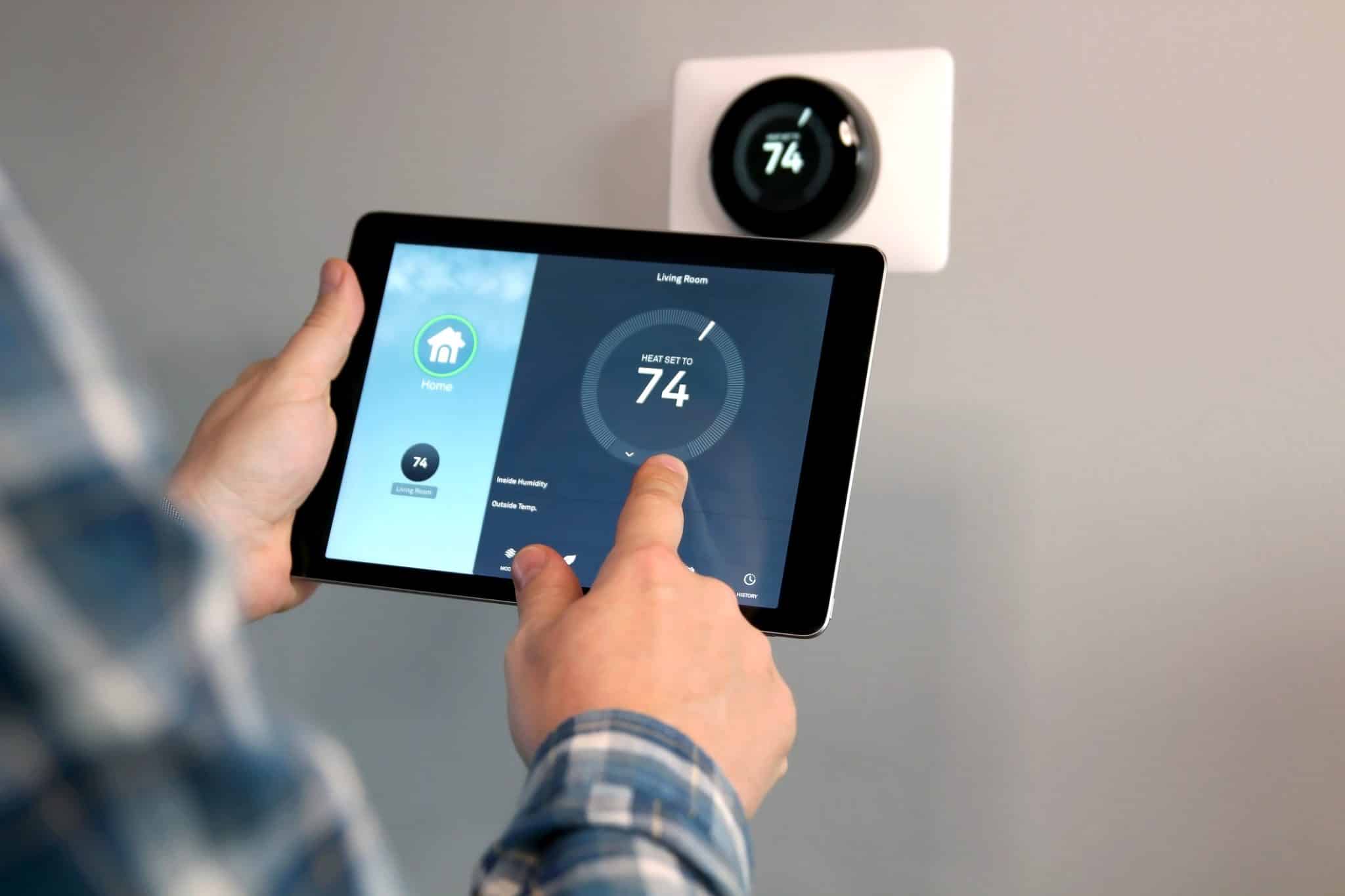
Your smart thermostat can absolutely lower your summer energy bills, and for most Colorado homeowners, the savings start within the first month. If you’re still running a basic programmable thermostat (or worse, a manual one), you’re likely leaving real money on the table every single day the AC runs.
Summer cooling accounts for a significant chunk of your annual energy bill. In Colorado, where temperatures can swing wildly between morning and afternoon, your thermostat is either working for you or silently working against you. Here’s exactly what you need to know to fix that.
The Short Version: Smart Thermostat Savings at a Glance
- Smart thermostats can reduce cooling costs by up to 10–15% compared to traditional models
- They learn your schedule, adjust automatically, and let you control everything from your phone
- Nest and Ecobee are the top two options — and they’re not created equal for every home
- Colorado homeowners may qualify for rebates through Xcel Energy that offset the upfront cost
- Professional installation ensures compatibility and gets you saving from day one
What Makes a Thermostat “Smart” — And Why It Matters for Summer
A smart thermostat isn’t just a thermostat with a touchscreen. It’s a device that learns your schedule, responds to real-time conditions, and communicates with your HVAC system in ways a standard thermostat simply can’t.
Think of it this way: a regular thermostat does what you tell it, when you tell it. A smart thermostat figures out what you would have told it, and acts before you even think to. That distinction is everything when summer temps climb, and your AC is running for hours on end.
Smart Thermostat vs. Programmable Thermostat — What’s the Real Difference?
Programmable thermostats were a solid upgrade back in the day. Set a schedule, forget it, done. But they have a fundamental flaw: they follow the same program whether you’re home, at work, on vacation, or sick on the couch.
Smart thermostats adapt. Programmable thermostats don’t.
Smart models use occupancy sensors, GPS location from your phone, and machine learning to adjust cooling in real time. According to the U.S. Department of Energy, you can save as much as 10% a year on heating and cooling just by turning your thermostat back 7–10°F for 8 hours a day, and a smart thermostat does that automatically, without you lifting a finger.
How Smart Thermostats Reduce Your Cooling Costs All Summer Long
Here’s where the rubber meets the road. Smart thermostats save you money through a few key mechanisms:
- Auto-away mode: When your phone leaves the geofence, your thermostat raises the set temperature. No more cooling an empty house.
- Learning algorithms: After about a week, most smart thermostats build a profile of your habits and start anticipating your needs.
- Energy usage reports: You get a breakdown of what’s driving your bills, which is half the battle.
- Remote control: Stuck at the office late? Cool the house down 20 minutes before you leave, not 3 hours.
The EPA’s ENERGY STAR program estimates that ENERGY STAR-certified smart thermostats save an average of $50 per year, and that’s a conservative baseline for homes in high-cooling climates like Colorado’s Front Range.
Pro Tip: The biggest waste in summer cooling isn’t the temperature you set, it’s cooling an empty home. Enable auto-away or geofencing on day one, and you’ll see the difference immediately.
Smart Thermostat Scheduling Tips to Maximize Summer Savings
Even the smartest thermostat needs a decent starting point. Here’s how to set yours up for maximum summer efficiency in Colorado:
- Set your “away” temp to 78–80°F when nobody’s home. It sounds warm, but your AC will cool the house down quickly when you return.
- Pre-cool before peak rate hours. If you’re on a time-of-use plan with Xcel Energy, electricity costs more in the late afternoon. Cool your home to 70°F by 3 PM, then let it coast through the expensive hours.
- Use vacation mode — not just a raised temp. Most smart thermostats have a dedicated vacation setting that factors in outdoor conditions and humidity.
- Don’t drop the temp dramatically when you get home. Cranking the AC to 65°F doesn’t cool the house faster — it just runs longer and costs more.
Our thermostat installation team can walk you through the optimal settings for your specific system and home size when we set things up.
Colorado Rebates That Make Smart Thermostats Even More Affordable
Here’s a piece of the puzzle a lot of homeowners miss entirely: you may not have to pay full price for that smart thermostat.
Xcel Energy offers rebates for qualifying smart thermostat installations in Colorado — currently up to $100, depending on the model and your account type. That can cut the out-of-pocket cost of a Nest or Ecobee nearly in half. Check the Xcel Energy rebate portal for current offers, as amounts and eligibility change seasonally.
On top of that, ENERGY STAR certified models may qualify for additional federal tax incentives under current energy efficiency programs. It’s worth a quick check before you buy.
Nest vs. Ecobee — Which Smart Thermostat Is Best for Summer Cooling?
Both are excellent. Here’s the honest breakdown:
Google Nest is the choice for simplicity. It’s sleek, easy to use, learns your schedule fast, and integrates beautifully with Google Home ecosystems. For most single-zone homes, it’s the plug-and-play winner.
Ecobee is the choice for performance. It comes with a remote room sensor out of the box, which means it can average temperatures across multiple rooms — a huge deal if your upstairs feels like a sauna while the main floor is freezing. It also tends to play nicer with more complex HVAC systems, including multi-stage and variable-speed equipment.
If you have a larger home, inconsistent room temperatures, or a more sophisticated system, Ecobee wins. If you want simplicity and a beautiful interface, Nest is hard to beat.
Why Professional Smart Thermostat Installation Makes a Difference
Here’s where a lot of DIY installs go sideways. Smart thermostats require a C-wire (common wire) to power themselves continuously, and many older Colorado homes don’t have one. Without it, you’re looking at battery drain issues, erratic behavior, or a thermostat that simply won’t work right.
A professional installation means:
- Proper compatibility check with your existing AC system
- C-wire installation or adapter setup if needed
- Correct HVAC system configuration in the thermostat software
- A walkthrough of the features so you actually use them
Getting the hardware right is half the job. Getting it configured right is the other half — and that’s where most DIY installs leave savings on the table.
Bottom Line: Your Thermostat Should Pay You Back
A smart thermostat is one of the highest-ROI upgrades you can make to your home’s comfort system. Between energy savings, rebates, and the sheer convenience of never coming home to a hot house again, it’s a no-brainer for Boulder County homeowners.
The team at SAC Mechanical has been helping Colorado families get more out of their HVAC systems since 1982 — and we serve communities throughout Boulder, Longmont, Louisville, Lafayette, and beyond. Pair a smart thermostat with a solid AC maintenance plan, and your system will run leaner, longer, and cheaper all summer long.
Ready to Start Saving on Your Summer Cooling Bills?
Your AC is working hard enough — your thermostat should too. Whether you’re ready to upgrade to a Nest or Ecobee or you just want an expert opinion on what makes sense for your home, we’re here to help. Call SAC Mechanical at (303) 825-9483 or contact us online to schedule your thermostat installation today.